
 Hizero
HIZERO vs Tineco vs Bissell: The Australian Hard Floor Cleaner Comparison
Key Takeaways
- Tineco and Bissell’s cordless floor cleaners both rely on suction and a fast-spinning microfibre roller, the same roller material every major brand in this category uses. HIZERO uses an exclusive Polymer Roller and No Suction Technology instead, a genuine mechanical difference, not a marketing distinction.
- Tineco and Bissell both collect liquid and debris together in a single dirty water tank. HIZERO’s Triple Auto Separation keeps solids, liquids and hair in three separate compartments as you clean.
- Tineco and Bissell’s rollers self-clean at the end of a session. HIZERO’s Polymer Roller flushes continuously during the clean itself, which is the real difference in day-to-day maintenance and in how much moisture ends up left on the floor.
- HIZERO runs for 60-plus minutes on a charge. Tineco and Bissell models generally run shorter, depending on the model and mode.
- HIZERO holds a 4.7-star rating from 778 verified Australian buyers and five consecutive years of ProductReview Product of the Year awards.
If you’ve already searched “hizero vs tineco” or owned a Tineco or Bissell machine yourself, you’ve probably noticed most comparison content online is either a brand’s own page talking about itself, or a generic listicle that doesn’t explain what’s actually different underneath. This guide names the real mechanism differences, including where Tineco and Bissell genuinely do some things better, so you can decide with the full picture.
How Do Tineco, Bissell and HIZERO Actually Clean Differently?
Tineco’s Floor One range and Bissell’s CrossWave range are both suction-based wet-dry vacuums, and both use the same roller material as most of the rest of the category: a fast-spinning microfibre roller. A motor pulls air (and with it, water and debris) up through that roller, the same basic principle as a standard vacuum, just adapted to handle liquid at the same time.
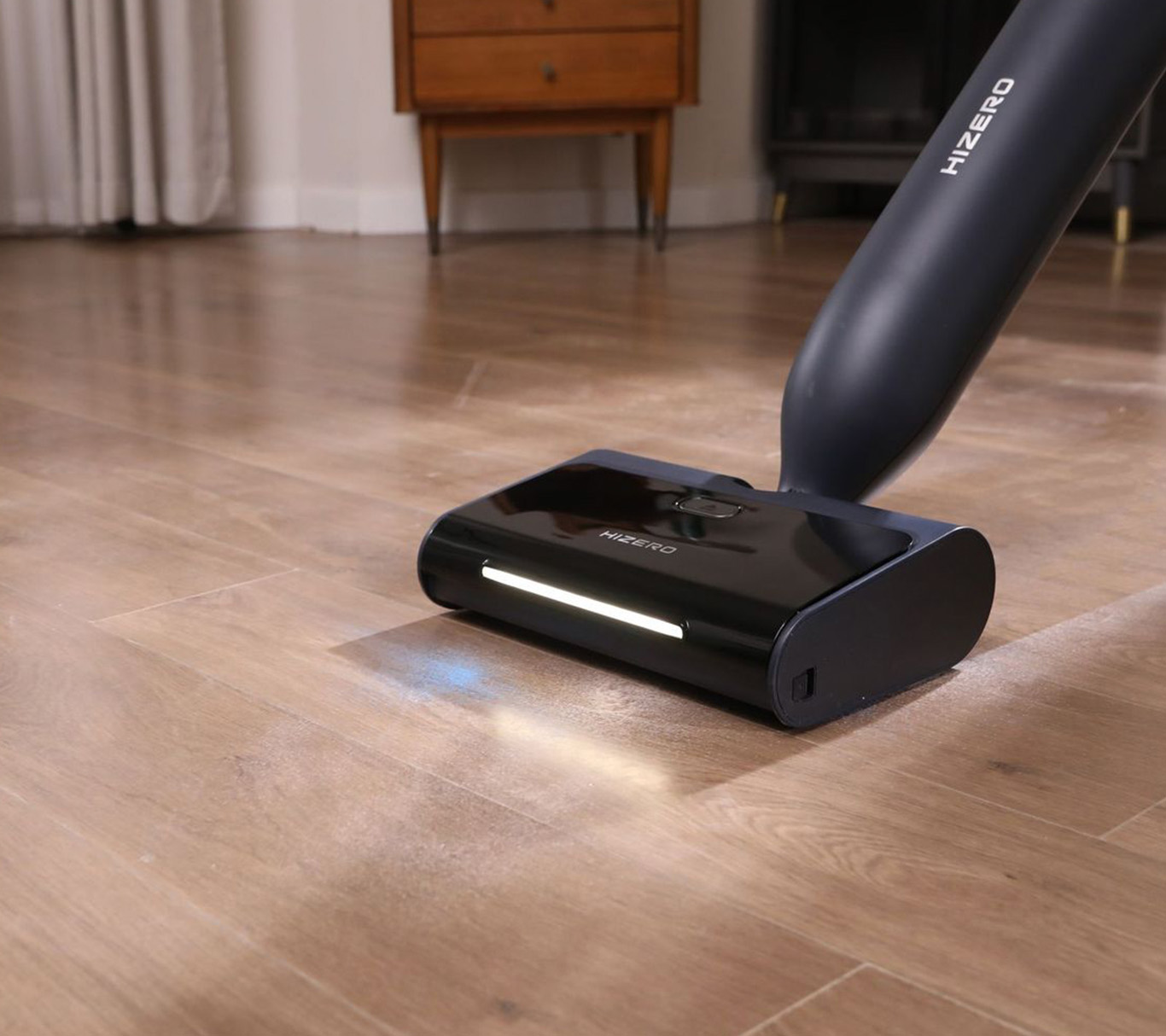
HIZERO works on a different principle entirely. There’s no suction motor and no airflow. A Polymer Roller, a material exclusive to HIZERO rather than the microfibre used across the rest of the category, physically picks up solids, liquids, hair and dust as it rotates against the floor, and a Triple Auto Separation System sorts what’s collected into three separate compartments as you go, rather than into one shared tank of mixed liquid and debris.
The practical difference shows up in two places: airflow and residual moisture. A suction-based machine pulls air across the floor to lift debris, and that same airflow can redistribute fine dust or grit that’s outside the direct path of the roller. HIZERO’s mechanism doesn’t rely on airflow at all, so there’s nothing to stir up dust that isn’t directly under the roller. The polymer material also picks up more of the moisture it puts down than a microfibre roller does, which is the difference behind the streaking and water-mark complaints that show up regularly in reviews of suction-based floor washers, particularly on hardwood and laminate.
| Tineco (Floor One range) | Bissell (CrossWave range) | HIZERO (F300 / F600) | |
| Roller material | Microfibre, spinning | Microfibre and nylon, spinning | Exclusive Polymer Roller |
| Cleaning mechanism | Suction + spinning roller | Suction + spinning roller | No Suction Technology, Polymer Roller |
| Waste handling | Liquid and debris combined in one dirty water tank | Liquid and debris combined in one dirty water tank | Triple Auto Separation into three compartments |
| Roller maintenance | Self-clean cycle, run after use | Self-clean cycle, run after use | Realtime Self-Cleaning, continuous during use |
| Residual moisture on the floor | Streaking and water-mark complaints are a recurring pattern, especially on hardwood and laminate | Similar suction-based mechanism, same general pattern | Lower, since the polymer roller retains more of what it picks up |
| Works on rugs | Yes, low-pile rugs | Yes, low-pile rugs | No, hard floors only |
| Cordless runtime | Roughly 30-50 minutes depending on model | Roughly 18-45 minutes depending on model and mode | 60+ minutes (both F300 and F600) |
| Noise and odour | No suction motor to compare against; runs quieter as a rule, since airflow noise is the main source in a suction machine | Dirty-water-tank odour is common enough that Bissell publishes its own troubleshooting guide for it | No suction motor at all, and Triple Auto Separation keeps debris out of standing water between empties |
Runtime, noise and self-clean details vary by specific model within each brand’s range, so treat the figures above as indicative of the category rather than a single exact model.
What’s the Real Difference Between a Suction Roller and a Polymer Roller?
Both Tineco and Bissell describe their self-clean function as flushing the microfibre roller with clean water, but it happens as a discrete step, typically triggered by pressing a button once you’ve finished cleaning, or automatically as you dock the machine. Between that self-clean cycle and the next one, the same roller is picking up everything it encounters, and whatever it doesn’t fully lift stays on the floor as residual moisture.
HIZERO’s Polymer Roller is flushed with clean water continuously, every second the machine is running, not as a separate step afterwards. It’s also a different material entirely, not a microfibre or bristle surface, which is why it retains more of the water it picks up rather than leaving a thin film behind. In practical terms, that means the roller you’re cleaning with a minute into a session is functionally as clean as the roller you started with, rather than accumulating debris across the session until the next self-clean cycle runs, and the floor behind you is drier as a result.
This matters most in homes with pets, which is the next section.
Which One Handles Pet Hair Best?
This is where the mechanism difference becomes a genuinely practical one rather than a technical footnote. A spinning microfibre roller, suction-based or not, is a physical fabric surface that hair can wrap around during use. Both Tineco and Bissell have added tangle-reducing features to newer models specifically because this is a known pain point in the category.
HIZERO’s Polymer Roller isn’t a fabric roller, and because it’s flushed continuously rather than accumulating hair across a session, there’s less opportunity for hair to build up and wrap around it in the first place. For a household vacuuming pet hair off hard floors regularly, this is less time spent stopping mid-clean to pull hair out by hand.
Which One Is Safest for Timber, Hybrid and Tile Floors?
All three brands make similar claims about being safe for sealed hard floors, and at a surface-contact level that’s broadly accurate for tile and hybrid flooring, where water resistance isn’t the limiting factor. Timber and engineered timber are where drying speed and residual moisture start to matter more.
Tineco and Bissell’s machines dry the floor as you pass over it, in the same way HIZERO does, since none of these are steam mops leaving standing moisture behind, but real-world complaints about streaking and water marks on hardwood specifically are common enough across both brands to be a genuine pattern worth knowing about rather than an occasional user error. HIZERO’s polymer material and continuous flushing leave less residual water in the first place, and its AirDry function dries the roller after every single pass, not just at the end of a session, which matters most if you’re doing a stop-start clean across multiple rooms rather than one continuous run.
If you’re specifically worried about moisture and engineered timber, our engineered timber floor guide covers what actually causes timber damage in more depth than any single comparison table can.
Where Do Tineco and Bissell Genuinely Do Well?
An honest comparison names this directly rather than glossing over it. Both Tineco and Bissell have a real advantage HIZERO doesn’t: their machines clean low-pile rugs as well as hard floors, using the same suction mechanism that vacuums up dry debris in the first place.
If your home is a genuine mix of hard flooring and rugs, and you want one machine to handle both, that’s a legitimate reason to choose a suction-based combo over HIZERO rather than against it. HIZERO is built specifically for sealed hard floors, and it doesn’t try to be a rug or carpet cleaner as well. For a home that’s predominantly hard floor with the occasional rug you’re happy to vacuum separately, that trade-off looks different.
Both brands also have wider retail availability across major Australian retailers, which matters if you specifically want to test a machine in person before buying, though HIZERO’s own showroom locations across five capital cities cover the same need for hard-floor-focused buyers.
What About After-Sales Support?
This is worth naming plainly rather than glossing over, since it shows up in real owner complaints. Tineco’s own Australian support page runs on email only, with a 24-hour response window rather than a local phone line, and it’s a common enough gap that customer reviews specifically flag the lack of Australian-based support after a machine develops a fault. Where a machine needs to be sent away for warranty repair, that turnaround becomes part of the real cost of ownership, not just the sticker price.
HIZERO’s after-sales support and warranty service are handled locally rather than through an overseas contact centre, which is a genuine factor worth weighing if a fault ever needs resolving, not just a nice-to-have.
What Cleaning Mechanism Actually Backs Up HIZERO’s Claims?
HIZERO’s F300 All-In-One Hard Floor Cleaner and F600 Cordless Hard Floor Cleaner run on the same core mechanism described throughout this comparison. Here’s the full technology stack:
- No Suction Technology lifts solids, liquids, hair and dust directly off the floor without airflow, removing both the redistribution risk and the motor noise that comes with a suction-based roller.
- An exclusive Polymer Roller, not the microfibre used across the rest of the category, flushed with clean water every second of the clean rather than in a single cycle run after the session ends.
- Triple Auto Separation keeps solids, liquids and hair apart in three compartments as you go, rather than mixed together in one dirty water tank.
- AirDry dries the roller after every pass, not just at the end of a session.
That mechanism is reflected in real buyer feedback too. HIZERO holds a 4.7-star rating from 778 verified Australian buyers on ProductReview.com.au, with five consecutive years of Product of the Year recognition in the category.
| Model | Weight | Tank Volume | Runtime |
| F300 | 3.5kg | 450ml clean / 400ml dirty | 60+ minutes |
| F600 | 4.5kg | 600ml clean / 600ml dirty | 60+ minutes |
Both models run the identical mechanism above, so choosing between them comes down to home size and tank capacity, not cleaning performance. Our F300 vs F600 guide covers that decision in full.
Frequently Asked Questions
Is HIZERO better than Tineco?
For sealed hard floors specifically, HIZERO’s exclusive polymer roller and no-suction mechanism avoid both the airflow redistribution risk and the streaking that a microfibre, suction-based roller can leave behind, and its continuous self-cleaning reduces roller maintenance compared to Tineco’s end-of-session self-clean cycle. If you also need to clean rugs, Tineco covers that and HIZERO doesn’t.
Is HIZERO better than Bissell CrossWave?
The same core differences apply: an exclusive polymer roller instead of the microfibre roller used across the category, separated waste instead of mixed liquid and debris in one tank, and continuous roller flushing instead of a discrete self-clean step. Bissell also cleans low-pile rugs, which HIZERO isn’t built to do.
Why doesn’t HIZERO clean carpets or rugs?
HIZERO is purpose-built for sealed hard floors: tile, timber, engineered timber, hybrid and vinyl. It isn’t designed as a general-purpose vacuum, which is a deliberate trade-off for how well it handles hard floors specifically.
Do Tineco and Bissell machines tangle with pet hair?
Both brands have introduced tangle-reducing features on newer models because roller tangling is a known issue with spinning microfibre rollers generally. HIZERO’s Polymer Roller doesn’t tangle in the same way, since it’s a different material and mechanism entirely.
Which brand dries floors fastest, and leaves the least water behind?
All three dry the floor itself as you clean, since none are steam mops. The meaningful difference is how much moisture the roller itself leaves behind and how it dries between uses. HIZERO’s polymer roller retains more of the water it picks up than a microfibre roller does, and its AirDry function runs after every pass rather than at the end of a session.
If you’re weighing this decision against what HIZERO owners actually think once they’ve bought one, our “Is HIZERO Worth It?” page covers real Australian buyer feedback in full, and if you’ve already decided HIZERO is the right mechanism for your home, the F300 vs F600 guide will tell you which model actually fits.


 Digital Thing